Support in material selection, geometries, coatings, magnetization, documentation and project validation.
Review of function, temperature, environment, required forces and project goals.
Selection of grade, material, shape, tolerance, coating and magnetization pattern.
Documentation, samples, technical review and support during approval.
Every sintered magnet goes through this complete process, with control at every critical point.
Precise weighing of Nd, Fe, B, Dy and Tb.
Vacuum induction melting and rapid solidification into 0.2–0.4 mm strips.
Hydrogen absorption to break down the alloy into coarse powder.
Fine milling down to 3–5 microns under nitrogen atmosphere.
Magnetic field alignment and isostatic compaction.
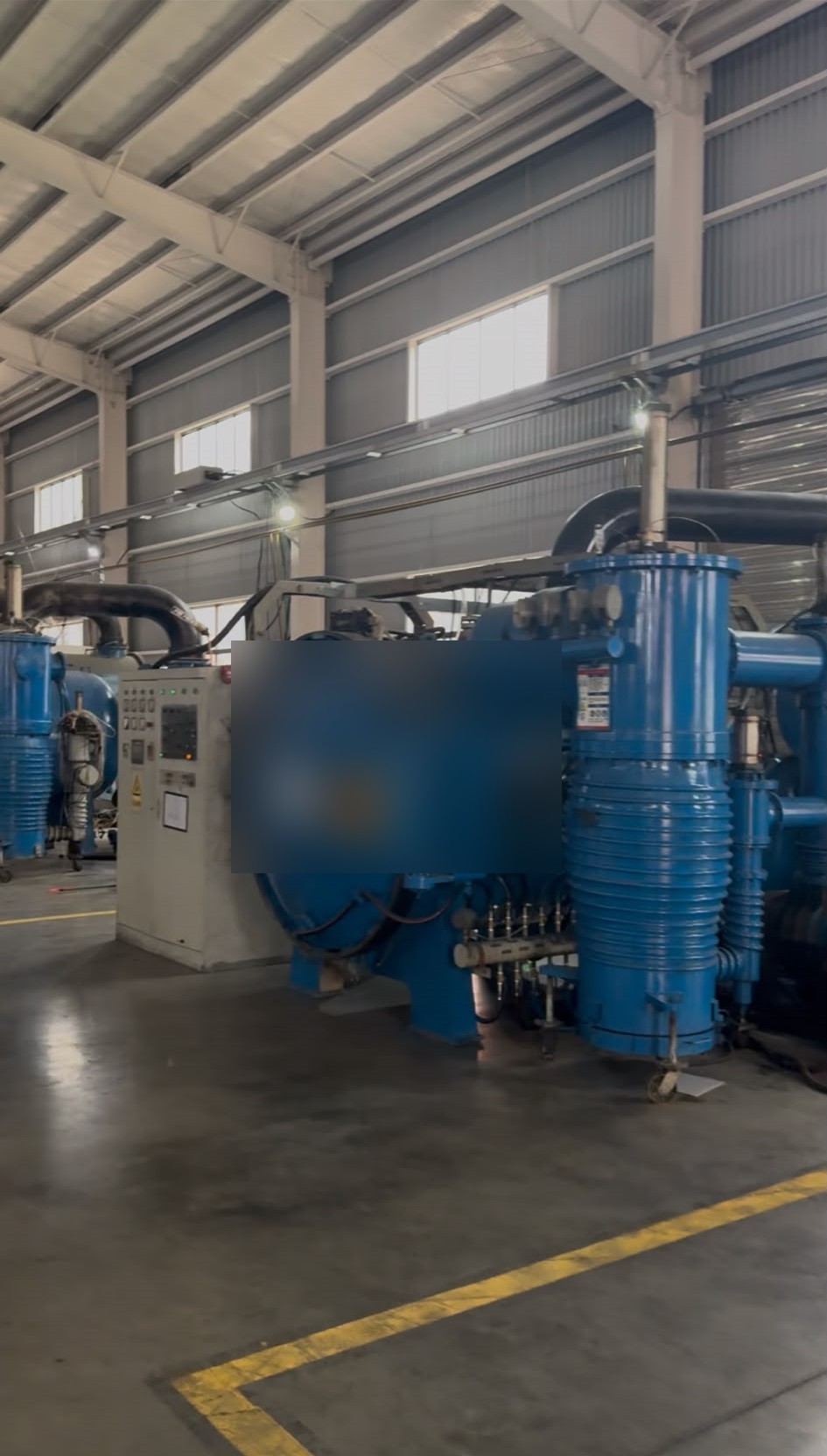
Densification at ~1100°C in a vacuum furnace.
Multi-wire saw and grinding to final dimensions.
Hysteresisgraph testing of Br, Hcj, Hcb and BHmax.
Optional Dy/Tb diffusion for enhanced coercivity grades.
NiCuNi, Zn, epoxy or PVD Al coatings per specification.
100% dimensional control and pulse-field magnetization.
Vacuum packaging with desiccant for safe transport.
Heavy rare earth elements (Dy, Tb) are applied to the magnet's surface and, through high-temperature diffusion, penetrate along the grain boundaries forming a high-coercivity layer — boosting thermal performance while reducing heavy rare earth consumption by 30% to 50% compared to conventional alloying.
Strip casting achieves precise control of the material composition. The molten alloy is rapidly cooled on a rotating wheel, forming thin strips that ensure a fine, uniform grain structure and stable properties in the finished magnet.
| Area | Support |
|---|---|
| Material | Sintered NdFeB, bonded and hybrid solutions |
| Design | Geometries, tolerances and magnetization |
| Surface | Coatings based on environment and application |
| Project | Prototypes, documentation and follow-up |
Our team reviews your specification at no cost before quoting.
Talk to engineering